The U.S. Census Bureau estimates 236,264 residents as of July 1, 2025, up 21.8% from April 2020 to July 2025, the fastest growth in this site's set. Most residents live in a Special Flood Hazard Area, so a heavy storm, a rising canal or a failed water line can quickly turn a home into a water damage job. Water damage in Cape Coral usually has two sources at once: flood water from rain and surge, and everyday leaks from plumbing and air conditioning. Each needs a different response, and each affects the permit route your repairs must follow.
Water Damage in Cape Coral: The Local Picture
Homes, Growth and How the City Is Built
Cape Coral is a large, spread-out city. Its 106.02 square miles of land hold 82,914 households, and 77.2% of homes are owner-occupied, so most water losses here happen in houses that families own and live in. Much of the housing was platted as individual lots, and a large share of it is canal-front or river-front, so water is part of daily life. The city's 236,264 residents live across those pre-platted lots, and each household is a separate property that a single water event can affect. Many canal-front and river-front homes sit close to open water, so a rise in the canal or river can reach the house itself, not just the yard. With 2.59 people per household on average and 25.0% of residents aged 65 or older, many homes include people who need extra help moving out of flooded rooms.
Permits and Flood Paperwork
Repairs to a home in Cape Coral's Special Flood Hazard Area need paperwork before work starts. The City of Cape Coral Development Services Department, through its Building Division, requires a permit for all improvements and repairs of structures in the SFHA, including a Substantial Improvement / Substantial Damage application. A remodel permit covers rebuild items such as drywall, baseboards, flooring, cabinets, electrical and plumbing, so a typical water damage rebuild touches the permit route at several points. The City defines freeboard as FEMA Base Flood Elevation (BFE) plus 1 foot. The NFIP 50% rule also applies: when repairs or improvements reach 50% of the structure's value, the building must meet current flood regulations. New FEMA maps for Lee County took effect November 17, 2022, so check each address rather than relying on an older flood map.
The Water Problems This Housing Actually Gets
Water damage here comes from two distinct sources that call for different responses. The first is rising flood water from heavy rain, storm surge or overflowing waterways. The second is ordinary failure inside the home, such as a supply line, water heater or air conditioner condensate leak. The City names heavy rain and storm surge as its main flooding sources, and it notes that stormwater systems can be overwhelmed during prolonged heavy rain. Flood water carries silt and contamination into wall cavities and under floors. A plumbing or AC leak often hides behind a cabinet or inside a ceiling until a stain or odor appears. Both leave wet materials in a warm, humid climate, where drying depends on moisture readings, not fans alone.
Storm Surge Exposure
Storm surge is Cape Coral's most serious water threat. The City identifies its most vulnerable coastlines as Charlotte Harbor, the Caloosahatchee River and Matlacha Pass. The City warns that surge can reach as high as 25 feet in an intense storm. That is the City's general warning, not a Cape Coral measurement. Hurricane Ian made landfall at Cayo Costa as a Category 4 storm on September 28, 2022. The National Hurricane Center's Tropical Cyclone Report records maximum inundation of 6 to 9 feet above ground level in Pine Island, Cape Coral and other communities along the mouth of the Caloosahatchee River. Water at that depth covers ground-level rooms, garages and mechanical equipment, which is why drying, documentation and permit steps must work together after a storm.
Water Damage Services in Cape Coral
Water Damage Restoration for Cape Coral Homes
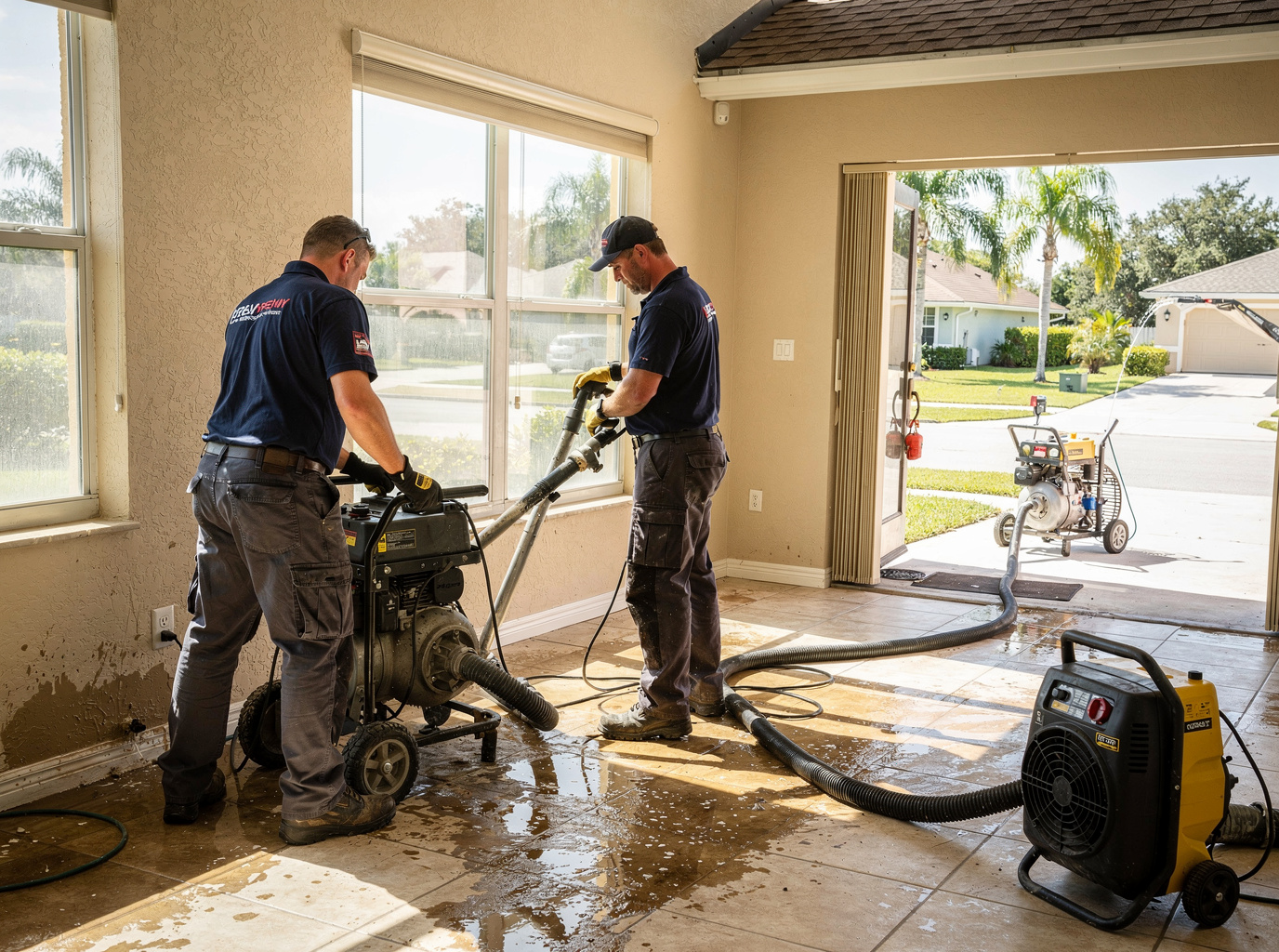
Water damage restoration covers the full path from standing water to a dry, rebuilt home. Work starts with water extraction and removal, followed by structural drying and dehumidification. Moisture mapping and water leak detection locate the source, not just the stain. Storm damage and flood cleanup are handled water line first, with contents documented before anything is moved. Rebuild materials wait until moisture readings confirm the structure is dry. Read the full process on our Water Damage Restoration page.
Mold Remediation for Cape Coral Homes
Mold remediation removes growth and corrects the moisture that fed it. After a water event, mold often appears weeks or months later behind vanities, inside wall cavities and along air conditioning pathways. The job begins with inspection and testing to scope the work. Containment comes before disturbance, followed by removal of contaminated porous material, antimicrobial cleaning and moisture-source correction. Post-remediation verification uses moisture readings. Full details are on our Mold Remediation page.
Why Cape Coral Homeowners Choose Us
Our service address is 4958 Sorrento Ct, Cape Coral, FL 33904, so every job we take here starts with the City's flood and permit rules, not a generic checklist. We name the right paperwork for this city. For a Special Flood Hazard Area repair, that means the City's permit and Substantial Improvement / Substantial Damage application, with the Forerunner flood-zone lookup used to confirm the address before work begins. Every job starts with a written scope of work that you can read before crews arrive, so the work, the materials and the order of steps are clear. Drying is confirmed by moisture readings, not by how a room looks, and the rebuild waits until those readings show the structure is ready. To discuss your home, call (239) 667-0361.
Why Water Damage in Cape Coral Should Not Wait
Water that stands in a Cape Coral home keeps working on the structure until it is removed and dried. Warm, humid air and wet surfaces give moisture a steady way to stay in drywall, subfloors, cabinet bases and insulation. Mold tends to follow standing water. Once it takes hold in a wall cavity or air conditioning duct, the cleanup reaches well beyond the original water line.
The permit reality adds a second reason to act early. If your home sits in the Special Flood Hazard Area, repairs need a City permit, and repairs at or above 50% of the structure's value bring the building under current flood regulations. Documenting the water line, the affected materials and the date of loss before anything is removed gives the Building Division and your insurer a clear record. Early documentation also keeps the scope tied to what the water actually did, not to what a later inspection has to guess. Waiting does not reset that clock. It only gives the water and any mold more time to decide the scope for you.
Water Damage Questions Cape Coral Homeowners Ask
Do I need a permit to repair flood damage to my Cape Coral home?
If the home is in the Special Flood Hazard Area, yes. The City requires a permit for all improvements and repairs of structures in the SFHA, including a Substantial Improvement / Substantial Damage application. Drywall, baseboards, flooring, cabinets, electrical and plumbing work fall under a remodel permit. Confirm your flood zone first, then ask the Building Division which permits apply to your scope of work.
How do I check my Cape Coral home's flood zone and base flood elevation?
Use the City's Forerunner flood-risk portal. It shows flood zone, base flood elevation, design flood elevation and Elevation Certificates by address. The new FEMA maps for Lee County took effect November 17, 2022, so check the address itself rather than an older map or an old flood letter. If no Elevation Certificate is on file, which can happen for buildings constructed before 1993, ask the Building Division what records exist.
What does the 50% rule mean for a flood-damaged home?
The NFIP 50% rule applies when repairs or improvements reach 50% of the structure's value. At that level, the building must meet current flood regulations. The rule is a planning threshold, so the scope of work, its valuation and the City's review decide where a specific project lands. A detailed written scope for each repair helps the City and your insurance adjuster see exactly what was done.
My home flooded and now it smells like mold. Is that one job or two?
Usually it is two phases under one plan. Water damage restoration dries the structure and removes wet materials. Mold remediation handles established growth, using containment, removal of contaminated porous material and correction of the moisture source. The inspection shows where growth began, and the remediation clears it. Both services are covered on this site, and the inspection tells you which work your home needs.
What affects the cost of water damage restoration in Cape Coral?
The final cost depends on the extent of water and moisture, the materials affected, whether rising flood water or a plumbing or AC leak caused the loss, the permit route the repair follows and the drying time needed. We explain the scope in writing before work begins so you can see what is included. The main factors are the extent of the water, the materials affected, the source of the water, the permit route the repair needs and the drying scope.
What should I do with a flooded Cape Coral home before crews arrive?
If it is safe to do so, turn off electricity to affected areas, and stay out of standing water where wiring may be energized. Photograph the water line, the damaged rooms and the contents before moving anything. Keep receipts for any emergency work. Then call (239) 667-0361 so the team can start extraction and documentation.
Talk to Our Cape Coral Water Damage Team
If water is in your Cape Coral home now, call (239) 667-0361. Tell us your address, what got wet and whether the home sits in a Special Flood Hazard Area, and we will confirm the next step. You can also send your details through our contact page. For active water, please call first.