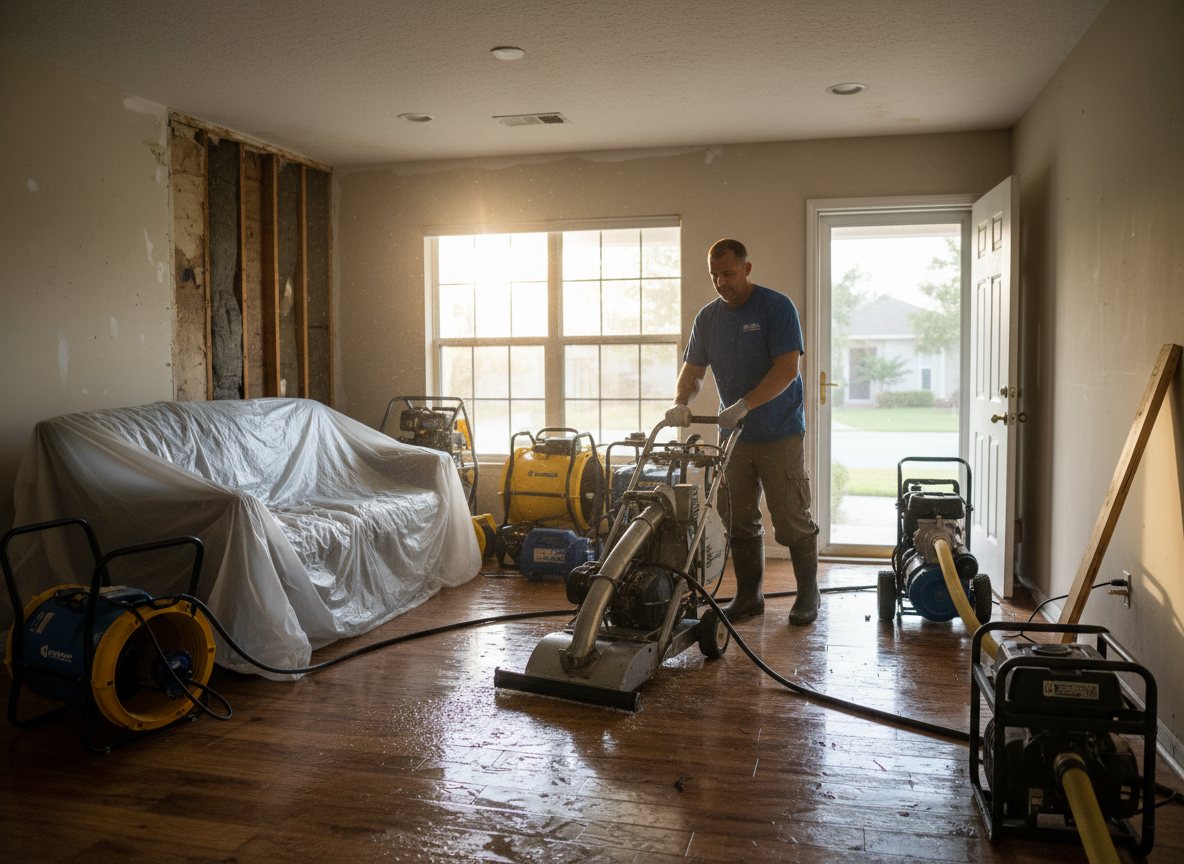
Why Cape Coral Homeowners Choose Us for Water Damage Restoration
We stop the water source first, extract standing water before drying is attempted, and use moisture readings rather than touch to decide when a room is dry. Every job starts with a written scope and ends with records you can keep, so you always know what was done and why.
Standing water comes out first. Water left in carpet, pad or subfloor keeps humidity high and extends drying, so extraction happens before any drying equipment is set. The water's source is identified before that step, because a ceiling stain shows where water appeared, not where it entered.
Moisture readings replace guesswork. Surfaces that feel dry can still hold water inside wall cavities, under flooring and behind cabinetry. Readings are logged for each material and compared against a dry standard before rebuild begins.
Every job also starts with a written scope listing the affected rooms, materials, readings and planned work. You receive it before work begins. Photos of water lines, damaged materials and the source go into the job file so you have a record for insurance or your own files.
Cape Coral permitting is part of the plan. In the Special Flood Hazard Area, repairs to the structure require a City of Cape Coral permit plus a Substantial Improvement / Substantial Damage application. That application compares repair cost against the structure's value under the National Flood Insurance Program's 50 percent rule. A remodel permit covers rebuild items such as drywall, baseboards, flooring, cabinets, electrical and plumbing work. We plan both permit paths into the scope from the start so the rebuild follows the City's rules from the outset.
Why Water Damage in a Cape Coral Home Should Not Wait
Water that enters a Cape Coral home keeps moving. It travels from the entry point into wall cavities, flooring systems and cabinetry, and wet materials in a humid canal city stay at risk for as long as they stay wet. Acting early limits how far the damage spreads and how much rebuild paperwork follows.
Water rarely stops where you can see it. Under a flooring system it can wick into the subfloor. Behind drywall it can settle at the bottom plate and soak insulation. Cabinet bases hold water long after the floor looks clear. Each hidden path keeps materials wet longer.
Delay also puts contents and documents at risk. Furniture, electronics, bedding, photographs and papers that sit in standing water or damp air may not be recoverable. Photograph and list affected items before moving them.
Mold is the consequence that follows standing moisture. Drying promptly is what keeps a water damage job from becoming a mold job. Mold that has already become established needs its own assessment and removal, which is covered on our Mold Remediation page.
Flood paperwork has a clock too. The City's Substantial Improvement / Substantial Damage determination compares the cost of repairs with the value of the structure. Early documentation of water lines and affected materials gives that determination a clear record.
Proof: How a Restoration Is Scoped and Verified
A restoration is scoped by mapping moisture in every affected room, identifying the source, extracting standing water, drying under controlled conditions and logging readings until each material reaches its dry standard. Photos of findings and a written scope come before work, and the permit route is confirmed for the address.
Moisture mapping comes first. Each affected room is checked with moisture meters at floor level, on walls up to the height of the water line, and in cavities where the meter can reach.
Source identification follows. The water path is traced back to its origin, and any active source is stopped or reported before drying begins. Drying over a running leak wastes time and materials.
Extraction then removes standing water, followed by controlled drying. Air movers and dehumidification run until readings show materials reaching their dry standard. Readings are logged for each material on each visit, so the record shows the trend, not just the final number.
For Cape Coral addresses, the permit route is part of verification. The City's flood-zone lookup is the Forerunner portal, which gives flood zone, base flood elevation and Elevation Certificate information by address. If the address is in the Special Flood Hazard Area, the repair needs a City of Cape Coral permit and a Substantial Improvement / Substantial Damage application. Homes built before 1993 may have no Elevation Certificate on file, so records may need to be checked before rebuild plans are drawn.
The Scenario Most Cape Coral Water Pages Skip: The Canal-Front Home That Floods From Two Directions
During a Gulf storm, a canal-front home in Cape Coral can take surge over the seawall side while rain overwhelms drainage on the street side. The job is split by source: safety and source control first, then documentation, extraction, separation of rising water from clean-water plumbing failures, and a permitted rebuild.
Consider a canal-front home during a Gulf storm. Surge pushes water over the seawall side of the lot, while heavy rain backs up in the street-side drainage and runs toward the entry. By the time the storm passes, the home may have two water sources, two water categories and two paths into the building. Treating it as a single water problem is how the job goes wrong. The National Hurricane Center recorded 6 to 9 feet above ground level in Cape Coral.
The first step is safety and source control. Electrical systems in standing water are a shock hazard, so power to affected areas is addressed before anyone enters, and openings that still admit water are closed where that is safe to do.
Next comes documentation before anything is removed. Water lines on walls, doors and cabinets are photographed and measured. Affected materials are photographed in place, and the home is recorded room by room. Those marks are the record the City's Substantial Improvement / Substantial Damage process relies on, so they are made before furniture, drywall or flooring leaves the house.
Extraction follows. Standing water from the surge is removed and handled as contaminated, because rising floodwater is not clean water. Materials that cannot be cleaned and dried to a dry standard are removed under the written scope.
The job then separates two sources. Rising water from surge and storm flooding follows flood rules and the Substantial Improvement / Substantial Damage application. A clean-water plumbing failure found at the same visit, such as a broken supply line inside a wall, is scoped, repaired and documented on its own track. Keeping them separate protects the record and the permit route.
Rebuild starts only after drying is confirmed by moisture readings and the City permit route is in place. The home is rebuilt to the City's flood rules from the start rather than patched back and reviewed later.
Water Damage Restoration in Cape Coral, Up Close
Cape Coral water damage restoration covers four connected services on this page: water extraction and water removal, water leak detection, storm damage and flood cleanup, and structural drying with moisture verification. Each step feeds the next, from finding the source to confirming a dry rebuild.
Water Extraction and Water Removal
Water extraction is the first physical step once the source is controlled. Standing water is removed before any drying is attempted, because drying equipment cannot work against a pool on the floor.
Carpet and pad need a different approach from hard floors. Carpet holds water in its fibers, and the pad acts like a sponge beneath it. Extraction removes as much water as possible from both, and pad that cannot be dried to standard is usually removed. Tile and sealed concrete shed surface water faster, but water underneath still needs to be checked.
Extraction shortens drying because less water in the materials means less moisture for the air to carry away. Removing water first lets dehumidification run at its intended load.
Floodwater from outside is not clean water. It is handled as contaminated, and porous materials that cannot be cleaned are removed rather than kept.
Water Leak Detection
A stain shows where water appeared, not where it started. Water runs along framing, pipes and subfloors before it reaches a ceiling or baseboard, so the visible mark can sit well away from the entry point.
Common indoor sources include supply lines to sinks, toilets and refrigerators, water heaters, and air conditioner condensate lines and drain pans. Each can fail quietly inside a wall or under a floor. A water heater that drips at its base or a condensate line that has clogged may cause damage far from its own location.
Moisture meters and tracing help map the wet area. Readings are taken across the wall, floor and cabinet run to locate the active path. Where the source is still leaking, the leak is stopped or the appliance is isolated before restoration starts, because a leak that keeps running brings moisture back into dried materials.
Storm Damage and Flood Cleanup
Storm damage and flood cleanup in Cape Coral means sorting water by source before work begins. Rising water from surge or overflowing waterways is handled as contaminated. Clean water from a plumbing or appliance failure is handled on its own track.
Contaminated materials are removed when they are porous and cannot be cleaned and dried to a dry standard, such as drywall, insulation, carpet and pad.
Water-line documentation is part of the cleanup. Marks on walls, doors and cabinets show the height reached, and photographs and measurements are recorded before materials are removed.
For storm repairs in the Special Flood Hazard Area, the City requires a permit for repairs to the structure, plus a Substantial Improvement / Substantial Damage application. Repairs at or above 50 percent of the structure's value bring the building under current flood regulations, so scope and records must be accurate from the first visit.
Structural Drying and Moisture Verification
Structural drying treats the walls, floors, cabinetry and air in a room as one connected system. Moisture moves between them, so a dry floor above a wet subfloor is not a finished job. Air movers and dehumidification are placed to draw moisture out of the materials and the air together.
Readings are logged for each material. Drywall, wood framing, subfloor, flooring and cabinet bases each have their own reading range and dry standard. The log records each reading by location and date, so the trend shows whether drying is progressing.
Drying is complete only when each material reaches its dry standard, not when the room feels comfortable or a set number of days has passed. Surface-dry is not dry. A wall can look and feel dry while its cavity still holds moisture, and a floor can feel dry while water remains beneath it.
Water Damage Restoration Questions Cape Coral Homeowners Ask
These answers cover the first steps after water is found, the permit rules that apply in Cape Coral, how dryness is measured and which factors shape the cost of water damage restoration. Each answer is based on the process and the City's published flood rules, not on promised outcomes.
What should I do first when I find standing water in my Cape Coral home?
Start with safety. Stay away from standing water near outlets, electrical panels and appliances, and turn off power to the affected area only if you can do so safely. If the water is coming from a plumbing or appliance source and you know where the shutoff is, close the water supply. Then photograph the water lines, damaged items and the source before moving anything, and call for restoration.
Do I need a permit to repair water damage in Cape Coral?
In the Special Flood Hazard Area, yes. Repairs to the structure need a City of Cape Coral permit plus a Substantial Improvement / Substantial Damage application. A remodel permit is required for rebuild items such as drywall, baseboards, flooring, cabinets, electrical and plumbing. You can check your flood zone in the Forerunner portal, and confirm the requirements for your address with the City before rebuilding.
How do you know when my home is actually dry?
Dryness is measured with moisture readings, not by touch or elapsed time. Each material is read at set points and logged against its own dry standard. A room is considered dry only when every material in the affected area reaches that standard, and the readings are kept as part of the job record.
What does water damage restoration cost?
The cost depends on factors that are set during the scope, not on a fixed price. These include the water source and category, the area and materials affected, the extraction and drying scope, and the rebuild scope. The written scope explains how each factor applies to your home before work starts, so you can see what drives the total.
If water has entered your Cape Coral home, call (239) 667-0361 to talk through the source, the scope and the permit route for your address. You can also visit our contact page for our details.