Fort Myers Beach is a barrier-island town of 5,287 people, and that population is down 5.3% since 2020, still smaller after Hurricane Ian. Owner-occupancy is 88.7%, and 53.5% of residents are 65 or older. The town's defining water reality is its position. The National Hurricane Center recorded maximum inundation of 10 to 15 feet above ground level on Fort Myers Beach and Estero Island, the deepest band in the communities covered by our research. Water damage restoration in Fort Myers Beach has to start from that exposure.
Water Damage in Fort Myers Beach: The Local Picture
Fort Myers Beach is a small, high-value island town with an older owner-occupied base and a long record of storm exposure. Four facts shape water damage work here: the homes, the Town's own permit route, the water problems barrier-island housing faces, and Hurricane Ian's impact on Estero Island.
The Town's Homes
Fort Myers Beach has 2,831 households within a town of 5,287 residents. Owner-occupancy stands at 88.7%, so most homes are held by the people who live in them, and those owners carry the cost and disruption when water reaches a living room or a ground-floor bedroom. The housing stock is high-value coastal property, which means flooring, cabinetry, built-in systems and finishes are often costly to replace. Residents skew older as well, with 53.5% aged 65 and over. For many of these households a water event is not only a repair question. It affects daily routines, mobility and the ability to stay in the home while work is completed. Restoration on the island has to plan for those realities from the first call.
Permits Through the Town
Permitting on Fort Myers Beach runs through the Town's own local jurisdiction. The Lee County Permit Center states that projects within the boundaries of Fort Myers Beach may need to apply through the local jurisdiction. Rebuild projects on the island may need to apply for permitting through the Town's own local jurisdiction. Lee County's unincorporated route does not apply here, and neither does the permit paperwork of Cape Coral or any other city. Whether a particular repair needs a Town permit depends on its scope and the property, so the question should be settled for each address before work starts. Owners planning repairs should ask the Town early, because the answer shapes the job from the start. We confirm the route for each address and build the job around the Town's process. Confirming the route is part of every island job we take on.
Water Problems Barrier-Island Housing Gets
Barrier-island housing faces a different kind of water than most inland homes. Storm surge can push saltwater into ground-floor rooms, under doors and into crawl spaces, and salt does not simply evaporate out of building materials. It stays in drywall, subfloors, insulation and wiring connections, where it can corrode metal and hold moisture in place. Condominium buildings add their own pattern, because water from an upper unit can travel down the stack and appear in units below, sometimes far from the original leak. Ground-floor rooms, garages and storage areas take the first hit when surge arrives. Standing water in these spaces keeps materials wet long enough to support mold. A useful assessment on the island looks at where the water came from, how far it travelled through the structure, and which materials hold saltwater that will need removal.
Hurricane Ian on Estero Island
Hurricane Ian made landfall at Cayo Costa as a Category 4 storm on 28 September 2022. The National Hurricane Center reports maximum inundation of 10 to 15 feet above ground level on Fort Myers Beach and Estero Island, the deepest band in the communities covered by our research. Water damage restoration on Fort Myers Beach has to start from that inundation band, so it is worth stating plainly. The same report includes an NHC estimate for this town of about 900 structures totally destroyed and 2,200 damaged. Those are estimates for Fort Myers Beach, not county totals, and they are labelled as NHC estimates. The scale of that loss explains the post-Ian rebuild stock on the island today, where repairs were made to structures that had been badly damaged, and it is why the way water is handled here matters.
Water Damage Services in Fort Myers Beach
Fort Myers Beach homeowners usually need one of two services after water enters a home: restoration to remove the water and dry the structure, or mold remediation when growth has followed. The two jobs differ in scope, and the summaries below show which one fits your situation.
Water Damage Restoration
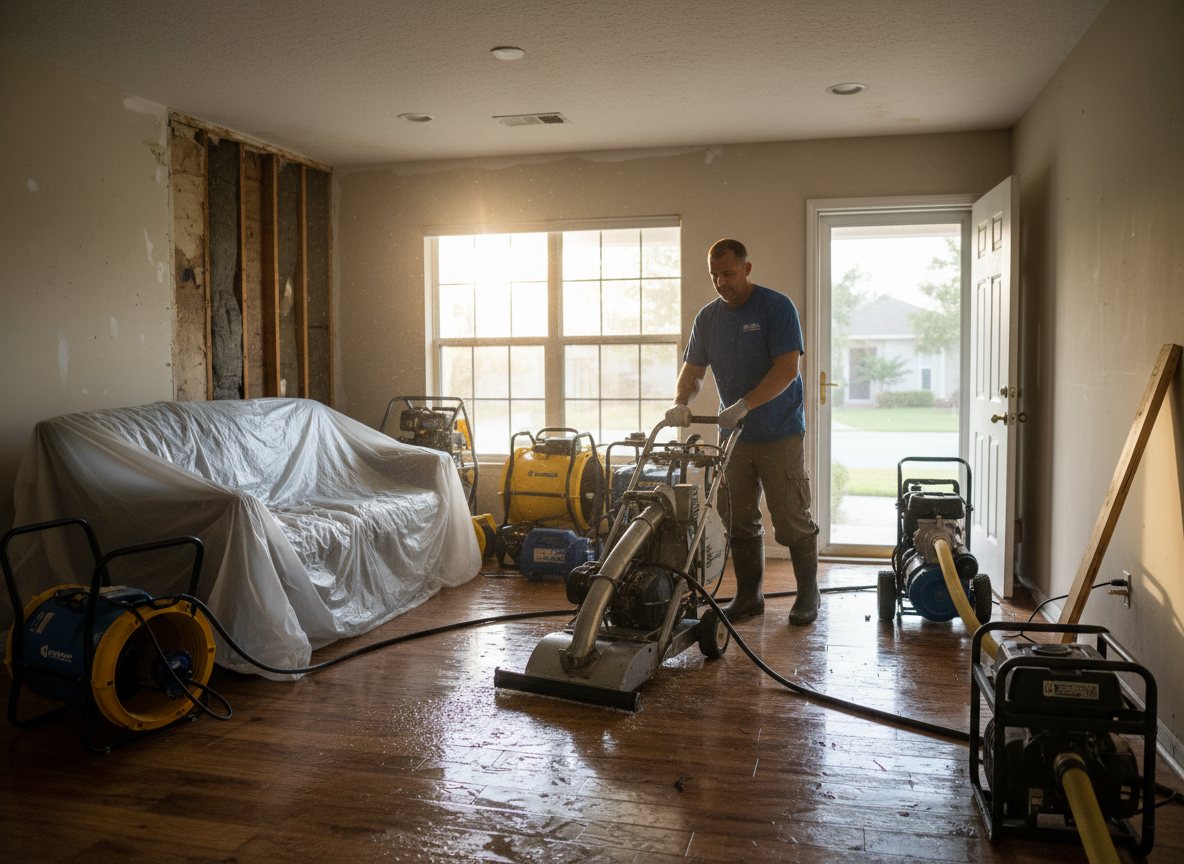
Water damage restoration covers removal of standing water, extraction, structural drying and the moisture checks that come before any rebuild. On Fort Myers Beach it also includes water leak detection and storm damage work, which are handled inside the same service so the source of water is found, not just the stain. Learn the full process on our water damage restoration service page.
Mold Remediation
Mold remediation addresses growth that has taken hold after water, including mold following saltwater intrusion in island homes and growth behind walls, under flooring and in cabinet bases where moisture stays trapped. The work begins with an inspection to see how far growth has spread, followed by containment before any disturbance and removal of contaminated porous materials. Correcting the moisture source is part of the same job, because growth returns when the water problem is left in place. See the mold remediation service page for the full process.
Why Fort Myers Beach Homeowners Choose Us
Our business is located at 4958 Sorrento Ct in Cape Coral, on the mainland, and it serves the island from that base. Reaching Fort Myers Beach means crossing the Caloosahatchee River and then driving onto Estero Island, so the island is a separate service area that we plan for on every job, not an afterthought. Island projects may need to apply for permitting through the Town's local jurisdiction, so the route is the Town's rather than the mainland's. Owners should confirm the route before any scope is agreed, since that answer shapes the job. Before any work begins, we provide a written scope that describes what will be done, so you know what is included before the work starts. That written scope is the document you can check against the work as it progresses. Each scope lists the work in plain terms before you agree to it.
Why Water Damage in Fort Myers Beach Should Not Wait
Waiting lets saltwater keep spreading through an island home's materials and gives mold its start. Saltwater corrodes metal, wiring and fixtures while it soaks into drywall and subfloors. Delay also gives mold time to establish after standing water, often in spaces people do not check, such as behind baseboards and inside wall cavities. On Fort Myers Beach, surge can push saltwater into ground-floor rooms, under doors and into crawl spaces, and that salt stays in drywall, subfloors and wall cavities after the surface water is gone. Many structures on the island were damaged in 2022 and have since been repaired, and a repaired structure that takes on water again can carry hidden moisture left from the earlier event. A second water event then lands on materials that were never fully tested after the first. The NHC estimate of about 900 structures totally destroyed and 2,200 damaged in this town means a share of the current stock was rebuilt after 2022. Acting early can keep the affected area narrower, limits the spread of saltwater contamination and makes it easier to document what was done. Call (239) 667-0361 for an assessment of your Fort Myers Beach home.
Water Damage Questions Fort Myers Beach Homeowners Ask
The questions below reflect conditions specific to the island, including its permitting route, its Hurricane Ian inundation band and its population and rebuild picture. Each answer is limited to what can be stated accurately.
Who issues permits for water damage repairs on Fort Myers Beach?
The Town of Fort Myers Beach does. The Lee County Permit Center lists Fort Myers Beach among the places where projects go through the local jurisdiction, so Lee County's unincorporated route and Cape Coral's permit office are not the starting point. Ask the Town whether a specific repair needs a permit before work begins.
How high did floodwater reach on Fort Myers Beach during Hurricane Ian?
The National Hurricane Center reports maximum inundation of 10 to 15 feet above ground level on Fort Myers Beach and Estero Island. That is the deepest band in the communities covered by our research. The same report estimates that about 900 structures in the town were totally destroyed and 2,200 damaged.
Why does the town's population matter for water damage work?
Fort Myers Beach had 5,287 residents as of July 1, 2025, down 5.3% since 2020, a population still smaller since Hurricane Ian. With 88.7% of homes owner-occupied, most water damage decisions on the island rest with the homeowner who lives there, so a clear written scope is worth asking for before any work begins.
What makes saltwater damage different from clean-water damage on the island?
Saltwater leaves salt behind in drywall, insulation, subfloors and wiring connections after the surface water is gone. Salt keeps materials damp and corrodes metal, so it cannot be handled the same way as clean water. Materials that hold salt may need to come out rather than simply dry, and that decision is made after inspection.
What affects the cost of water damage restoration on Fort Myers Beach?
Cost depends on factors specific to the property: how much water entered and how far it travelled, which materials hold saltwater, whether mold has started, the size of the affected area, and which permit route applies to the address. This page does not quote figures. Saltwater from surge reaches ground-floor rooms on the island, so that exposure shapes the scope. The written scope provided before work starts sets out what is included.
Can water damage on the island lead to mold even after drying?
Yes. Growth can start in damp materials, particularly in hidden spaces such as wall cavities and under flooring, if moisture is not fully removed. Ground-floor rooms on the island take saltwater first, and that salt can hold moisture in place. Drying visible surfaces alone may not address moisture trapped inside the structure, which is why the restoration process checks moisture readings before any rebuild.
Contact Us About Water Damage on Fort Myers Beach
If water has entered your Fort Myers Beach home, call (239) 667-0361 to talk through the next steps. Ask for the permit route and the written scope on that first call, before any work begins. Our contact page lists the details for reaching the business. We will confirm the permit route for your address and put the scope in writing before work starts.