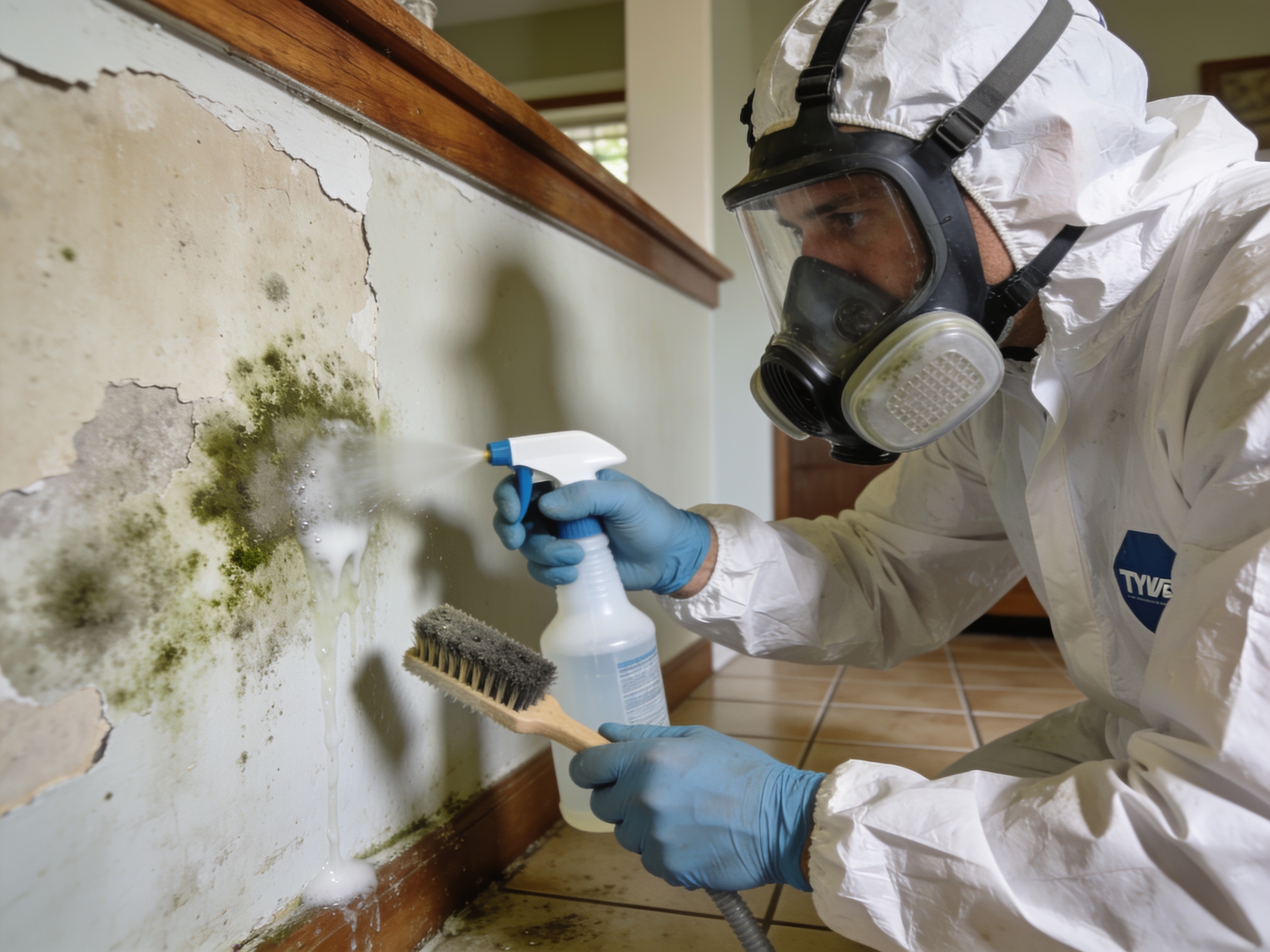
Why Cape Coral Homeowners Choose Us for Mold Remediation
We treat the moisture source as part of the mold job, not an optional extra. Growth removed while a supply line still leaks, a condensate line is blocked, or floodwater still has an open path into the wall will come back. Containment comes before disturbance, affected materials are removed rather than painted over, and the space is dried to verified readings before any rebuild begins.
Our process starts where many jobs go wrong: the moisture source. A patch removed while a fitting keeps weeping or an AC condensate line keeps backing up will return. Correcting that source is part of this job, so the homeowner does not have to coordinate a separate repair and hope it lines up with the cleanup.
Containment is set before anything is disturbed. Growth cut into or pulled out without a sealed work area sends spores into clean rooms and toward the air handler, and that spread is hard to undo. Sealing the work area first protects the rest of the house and the homeowner's belongings.
Affected materials are removed rather than painted over. Paint and sealant can hide a stain, but they do not remove growth from porous drywall, insulation or cabinetry. Where those materials are contaminated, they come out, and the cavity is checked for the full extent of the growth.
The space is dried to a verified reading before any rebuild. Closing a wall over damp framing restarts the problem, so surrounding materials are measured with moisture meters until they reach the clearance readings used on the job. The scope is written down before work begins, so the homeowner knows what will be removed, what will be cleaned and what the job covers.
Why Mold in a Cape Coral Home Should Not Wait
Waiting lets mold in a Cape Coral home spread beyond the room where it started. Growth in a damp bathroom or wet wall cavity can move into the framing, insulation and ceiling above it, and humid air can carry spores along HVAC pathways into rooms that were never wet. The longer growth runs, the larger the area the job must cover.
Porous materials are the reason timing matters. Drywall, insulation, carpet pad and cabinetry absorb water and hold growth in ways a surface wipe cannot reach. An area that could have been cleaned in place can become a removal job once the material has stayed wet, which means more cutting, more debris and more rebuild work.
Water events in a flood-prone city are sometimes dried on the surface only. A floor that looks dry can still hold moisture inside the wall, and that moisture can keep feeding growth behind closed walls for a long time before anyone sees a stain. The room may look fine while the cavity does not.
Waiting also tends to put the homeowner back in the same position. Without finding and correcting the source, the growth returns, and a second round of removal adds to the first. If you notice a musty smell, a discolored wall or a patch that keeps coming back, an assessment now is the sensible step, while the affected area is still defined.
Anyone with respiratory sensitivities who notices growth should discuss exposure concerns with a physician. This page does not diagnose or predict health effects.
Proof: How a Mold Job Is Scoped and Verified
A mold job is scoped by inspection and moisture readings, not by the visible patch alone. The affected area and the moisture source behind it are inspected first, and surrounding materials are measured with moisture meters so the scope reflects the actual extent of wetness. Containment, removal, cleaning and drying then follow that written scope.
Containment and negative-air practice keep disturbed material from spreading during removal. Contaminated porous material is taken out, and remaining surfaces are cleaned. Drying is confirmed by readings before anything is closed up.
Permits matter in the City of Cape Coral. Most residents live in a Special Flood Hazard Area, and the City's flood protection page states that improvements and repairs of structures in the SFHA require a permit, including a Substantial Improvement or Substantial Damage application. A remodel permit is also required for repairs that include drywall, baseboards, flooring, cabinets, electrical or plumbing. When a mold job leads into those items, the rebuild follows that route. The City's Forerunner portal shows flood zone, base flood elevation and Elevation Certificates by address.
The homeowner receives photos and the written scope for their records. That record shows what was found, what was removed, what readings were taken and what the job covered.
The Scenario Most Cape Coral Mold Pages Skip: The Growth Found at Resale, Months After the Water
A homeowner preparing a Cape Coral house for sale finds dark growth behind a bathroom vanity and inside a bedroom wall. There was never a puddle, and no one remembers a flood. In this scenario the water came from a slow supply-line leak that wet the cabinet floor and the wall cavity gradually, without ever pooling on the floor.
A slow leak like this is easy to miss. A drip at a shutoff valve or flexible supply line soaks the vanity base and the wall behind it over time. The room looks dry from the doorway while the framing behind the vanity stays wet, and the bedroom wall on the other side of the house can hold the same problem.
The honest sequence starts with the source, not the stain. The leak is found and stopped first, because cleaning the vanity while the supply line still drips will not hold. Moisture readings then define the area. The vanity, the back wall, the subfloor and the bedroom wall are scoped by readings and inspection, not by the visible patch alone. A bedroom wall that looks clean on the surface may still hold growth in the cavity, so the inspection opens what needs to be opened.
Containment comes next. The bathroom and the bedroom are sealed before the vanity comes out, so spores do not travel into the rest of the house or the air handler. Contaminated porous material is removed, which here usually means drywall, the vanity base and any wet or discolored insulation. Remaining surfaces are cleaned, and the cavities are dried until they reach verified readings.
Only after the drying readings are recorded does the rebuild start. In Cape Coral, replacing drywall, cabinets and plumbing in a home inside the Special Flood Hazard Area goes through the City's permit route, so the rebuild should be scoped in writing before the walls are closed.
This is where the earlier water damage restoration page matters. Its drying standard, which calls for moisture readings before rebuild, is what keeps a slow leak from being closed up behind new drywall. Skip that standard, and the growth is simply hidden again.
Mold Remediation in Cape Coral, Up Close
Each stage of a mold job in Cape Coral has its own purpose. Containment protects the clean parts of the home, removal takes out what cannot be cleaned, the moisture source is corrected so growth does not return, and drying is verified before the job closes. The four stages below describe what happens on site.
Containment and Air Control
Containment is the sealed work area built before anything is disturbed. Plastic barriers close off the affected room and the doorways to clean rooms, and negative air equipment keeps the air in the work area at lower pressure than the rest of the house. That pressure difference keeps spores from drifting out during removal, which is when they are most likely to move.
Clean rooms, supply and return registers, and the air handler get specific attention. Growth near ductwork or in an HVAC pathway can spread through the system, so the plan addresses those openings before demolition starts.
Occupants' belongings are protected too. Furniture is moved out or covered, and the homeowner is told which room will be out of use during the work. When a room must stay closed until drying readings are verified, that is stated in the written scope rather than discovered on the day.
Removing Mold-Contaminated Materials
Removal targets materials that cannot be cleaned to a reliable standard. Drywall, insulation, carpet pad and cabinetry are porous, so growth that has entered them stays in the material even when the surface looks clean. Those items are cut out, bagged and removed from the home under containment.
Hard, non-porous surfaces such as sealed tile, metal framing and many finished wood surfaces can often be cleaned in place. Each surface is decided on what the inspection and readings show, not by a general rule.
Once the material is open, the cavity is exposed to check the full extent of the growth. Growth often runs past the first visible edge, along studs and into the top plate or floor cavity, and the open wall shows where the scope must stop. Debris is bagged as it comes out, so the work area does not become a staging area for contaminated material.
Correcting the Moisture Source
Growth returns if the water that feeds it keeps arriving, so the moisture source is corrected as part of this job. The inspection traces the path: a supply line or fitting that drips inside a cabinet, an AC condensate line that backs up into a wall or ceiling, or a flood entry point that let water into the structure. The leak is repaired. In a Special Flood Hazard Area, flood entry repairs follow the City's permit requirements.
Humidity matters too. In a humid home, an AC system that is not pulling moisture from the air can leave indoor humidity high enough to support growth on cool surfaces, so the air side is checked alongside the water side.
Remediation without source correction fails in a predictable way. The area is cleaned, the wall looks right, and then the leak or condensate problem wets the same material again.
Drying, Cleaning and Verification
Drying happens in the cavity and in the surrounding materials, not just on the visible surface. Air movers and dehumidification are set to pull moisture from framing, subfloor and adjacent drywall, and drying is tracked until those materials reach the clearance level set for the job.
Remaining surfaces are cleaned after removal and before the drying check, with containment still in place. Cleaned surfaces are rechecked, and the work area stays closed until cleaning and drying are both complete.
Moisture readings are the clearance standard used on this job. Start and end readings are recorded side by side, so the homeowner can see the change rather than relying on a visual impression.
What the homeowner receives in writing includes the scope, the photos taken during the job and the moisture readings. Those records show what was found, what was removed and what the space measured when the job closed.
Mold Remediation Questions Cape Coral Homeowners Ask
Cape Coral homeowners ask the same practical questions about cost, permanence, insurance and taxes. The answers below stay within what this business can stand behind: the factors that shape the work, the process used on site and the records a homeowner keeps. Coverage and tax treatment are decided by the insurer and a tax professional.
What is the average cost of mold remediation in Florida?
This page gives no figures, ranges or averages. The cost of mold remediation depends on the extent and location of the growth, which materials are affected, how much containment the work needs, how the moisture source is corrected and how much rebuild follows the removal. A written scope lists those factors for the specific home, so the homeowner can see what each line of the work covers.
What kills mold permanently in a house?
Surface treatments alone cannot keep mold from returning. Growth returns when its moisture source keeps running or when contaminated porous material stays in place. Lasting results come from removing that material, correcting the moisture source and drying the space to verified readings. This business makes no product claims and gives no guarantees about how long results will last.
Is mold remediation covered by insurance in Florida?
Coverage depends on the insurance policy and on the water source behind the growth. This business makes no coverage determination, and the homeowner's insurer makes that decision. Documentation is what the homeowner will need: photos, the written scope, moisture readings and invoices for the work.
Can I write off mold remediation on my taxes?
This business cannot give tax advice. Whether mold remediation is deductible depends on the property's use and the homeowner's own situation, and a tax professional is the right source for that question. Keep the written scope, invoices and photos either way, since they document the work.
To talk through mold in your Cape Coral home, call (239) 667-0361 or visit our contact page. Our office is at 4958 Sorrento Ct, Cape Coral, FL 33904. Have the address, the location of the growth and any known water event ready when you call.